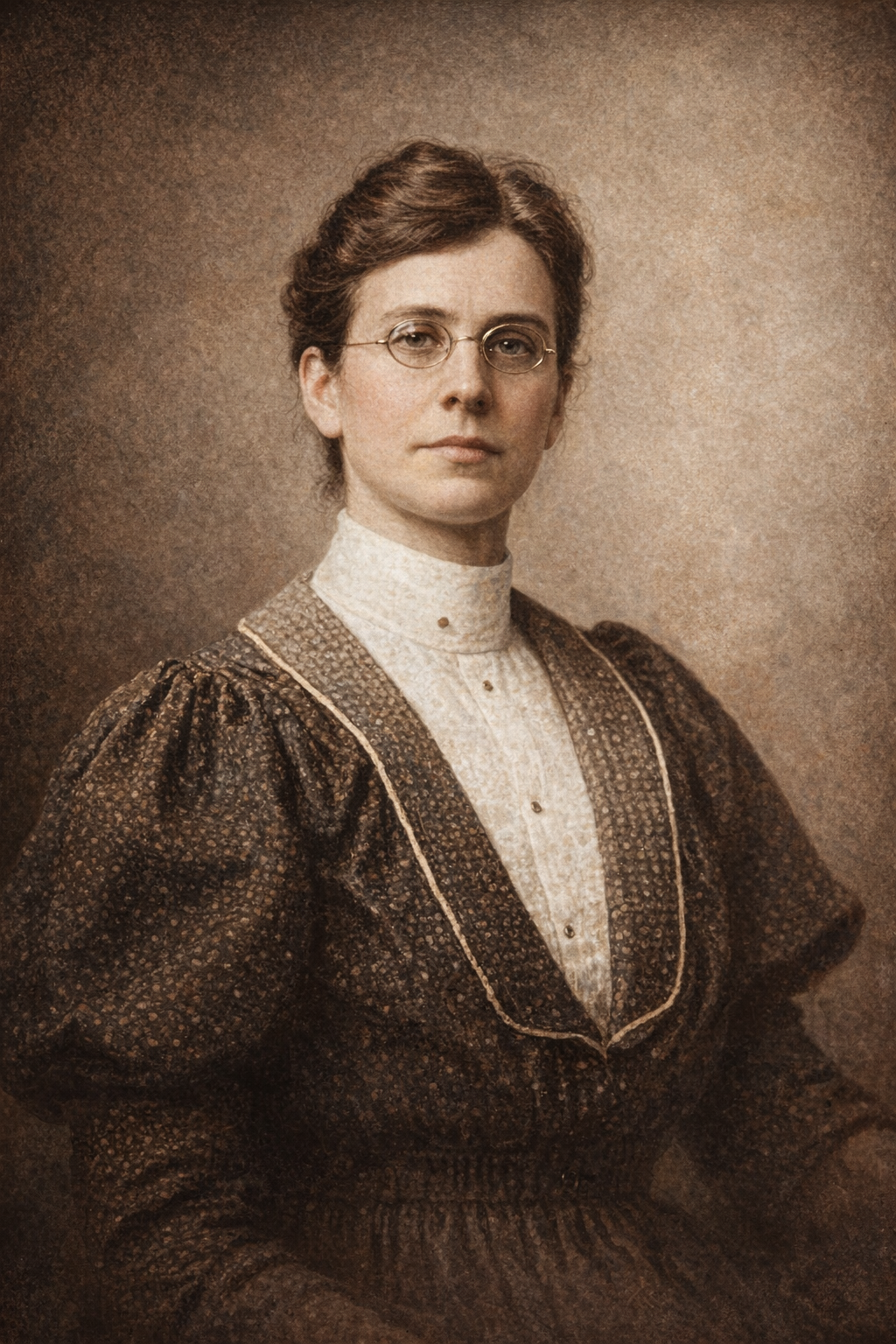
A Gifted Assistant
Fannie Bolton was born in Maine on September 18, 1853. She came into early Adventism as a writer of real ability — clear prose, an eye for structure, a feel for persuasive religious language. These gifts brought her to the attention of Ellen White, who employed her in the 1890s as a literary assistant, tasked with editing and polishing manuscripts before they went to press.
It was meaningful, close work. Fannie read Ellen White's rough drafts, smoothed awkward sentences, strengthened transitions, and helped prepare material for publication. She sat near the center of what was, in Adventist terms, the most consequential literary output of the age.
The Fatal Conceit
The problem was what Fannie did with her proximity.
Over time she began to reason — and then to say openly — that the literary quality readers admired in Ellen White's books and articles came not from the Spirit of God working through a prophet, but from her own editorial hand. She told others that the language, the rhetorical force, the persuasive grace of EGW's published writings were in large part her contribution. She presented herself, in effect, as the actual author of what the church received as inspired counsel.
Ellen White directly addressed this claim. In letters documented in the Manuscript Releases, she corrected the record in plain terms — Fannie had not originated the messages, and the spiritual content had never come from literary polish. The Manuscript Releases record the solemn verdict: "Fannie Bolton is disconnected with our work." (9MR 268.2)
Sharing Confidential Correspondence
The authorship claims were damaging enough. What compounded the offense was what Fannie did with private material.
She took confidential letters from Ellen White's files — correspondence not intended for general circulation — and shared them with individuals outside the work. This was a direct betrayal of trust, a disclosure of private prophetic counsel to those who had no authority to receive it. Ellen White considered this a serious breach, and it contributed substantially to the decision to formally sever the relationship.
The record in Ellen White's letters and manuscript releases documents this explicitly. By 1897, EGW wrote that it had become impossible to continue employing someone who could not keep confidence. (11MR 325.2)
Cooranbong: A Breakdown
During the years Ellen White was based in Australia (1891–1900), Fannie Bolton accompanied the work for a period. By 1896 she had collapsed under the weight of her own contradictions. Ellen White recorded that Fannie arrived at Cooranbong "broken down with nervous" exhaustion — a complete breakdown that ended her usefulness for a season. (MR926 62.2)
Ellen White's response was pastoral, not punitive. She made provision for Fannie's care, prayed for her recovery, and — in characteristic mercy — considered restoring her to service once she had recovered. "I now see why I was directed to give Fannie another trial," she wrote at one point (11MR 331.3), suggesting she genuinely hoped the woman would be reclaimed.
A Cycle of Dismissal and Mercy
What followed was a painful pattern: Fannie would be restored to limited duties, show improvement, then relapse into the same behaviors — making claims about the writings, failing to maintain confidentiality, operating with a spirit of self-promotion that made close collaboration impossible.
Ellen White extended opportunities more than once. The manuscript releases contain a letter apparently written in response to Fannie's own request to return to service: "You asked if you could come back again…" (9MR 274.1). The answer each time was weighed carefully. Each time the door opened, it eventually closed again.
By 1897, after the confidentiality breaches and the continued false claims about authorship, Ellen White formally disconnected Fannie Bolton from her work. The language in EGW's letters was clear and sorrowful: it was "not the Fannie Bolton we knew" who now presented herself. (MR926 77.4)
Assessment
Fannie Bolton lived until February 24, 1934 — eighty-one years. What she accomplished in her decades after leaving Ellen White's employ is not well documented in the historical record that survives.
What is documented is the nature of her failure, preserved in 355 references in Ellen White's own corpus. She had gifts. The gifts were real. But she placed herself at the center of a work that belonged to God, convinced herself that the Spirit's fruit was her own craftsmanship, and acted on that conviction in ways that caused real harm to people who trusted her.
Hers is not a record that Adventist history celebrates — but it is a record that Adventist history keeps, because the lesson it holds is permanent: proximity to sacred work does not confer ownership of it. The temptation to claim the prophet's mantle is old, and Fannie Bolton is among those who show what that temptation costs.
Primary sources: Ellen G. White, Manuscript Releases vol. 9 (9MR 268.2, 274.1), vol. 11 (11MR 325.2, 331.3), Manuscript Release 926 (MR926 62.2, 77.4); Letter 25, 1897 (April 11, 1897); 12LTMS LT 115, 1897. All EGW materials available at egwwritings.org.