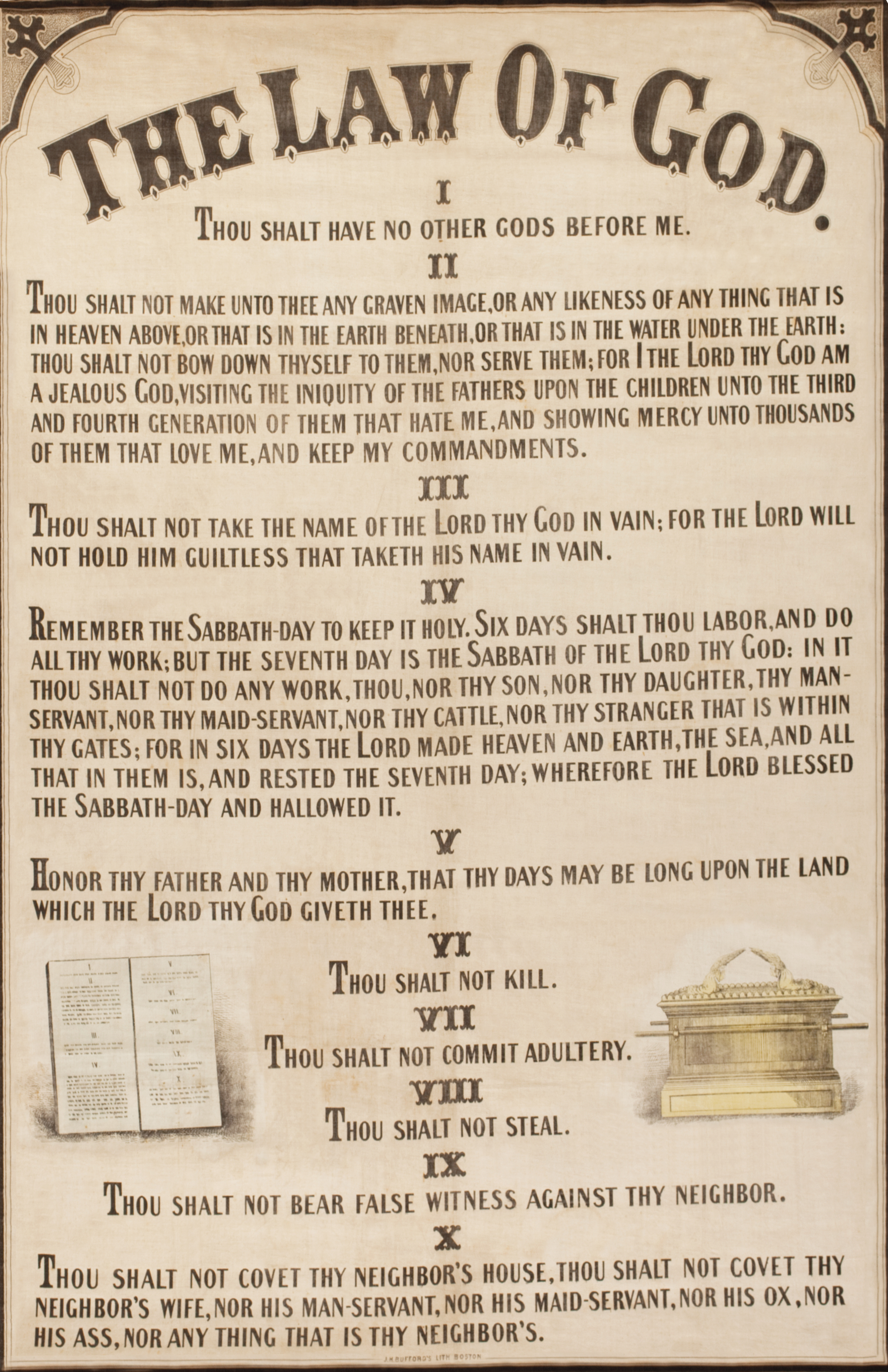
The 1850 Law of God Chart: History & Significance
The 1850 Law of God Chart is one of the most iconic visual tools produced by early Seventh-day Adventists. Created in the wake of the Great Disappointment, this chart was designed to teach the centrality of the Law of God—especially the Sabbath—within the context of the heavenly sanctuary and the Three Angels' Messages.
The chart was developed under the theological direction of James White, Joseph Bates, and other pioneers, and was hand-painted by John and Charles Pearson. Its most prominent feature is the Ark of the Covenant, shown open to reveal the Ten Commandments, symbolizing the unchanging law of God in the Most Holy Place of the heavenly sanctuary (see Revelation 11:19).
The 1850 chart was used in evangelistic meetings and home studies to visually connect the prophecies of Daniel and Revelation with the Adventist understanding of Christ's ministry in the heavenly sanctuary. It powerfully illustrated the Sabbath as the seal of God and the final test for God's people.
Key Features of the 1850 Law of God Chart
- Ark of the Covenant: Central, open to display the Ten Commandments, emphasizing the law in heaven.
- Heavenly Sanctuary: Shows the Most Holy Place, connecting prophecy to Christ's ministry.
- Prophetic Timelines: Visualizes Daniel 8:14 (2300 days), the 1260, 1290, and 1335 days, and other time prophecies.
- Three Angels' Messages: Highlights Revelation 14 and the call to keep God's commandments and faith in Jesus.
- Sabbath Emphasis: The fourth commandment is often highlighted, showing the Sabbath as the seal of God.
Life Sketches
John Pearson: Chartmaker
John Pearson was a Millerite Adventist and skilled artisan. Along with his brother Charles, he hand-painted the original 1850 Law of God Chart under the direction of James White and other pioneers. The Pearsons' craftsmanship brought the pioneers' prophetic understanding to life, making complex timelines and sanctuary themes accessible to all.
Charles Pearson: Chartmaker
Charles Pearson was a Millerite Adventist and skilled artisan. Along with his brother John, he hand-painted the original 1850 Law of God Chart under the direction of James White and other pioneers. Their work is recognized as a historic contribution to the Advent movement.
James White: Theological Director
James White provided theological leadership for the chart, ensuring it reflected the Adventist understanding of prophecy, the law, and the sanctuary. He promoted its use in teaching and evangelism.
Otis Nichols: Publisher
Otis Nichols, a key Adventist publisher and supporter of Ellen White, was instrumental in printing and distributing the 1850 Law of God Chart, helping to spread its message widely.
Legacy and Impact
The 1850 Law of God Chart remains a historic artifact and a symbol of the Advent movement's prophetic identity. It visually summarized the core teachings of early Adventism: the sanctuary, the Sabbath, and the imminent return of Christ. Today, it is treasured by historians and collectors as a witness to the faith and mission of the pioneers.